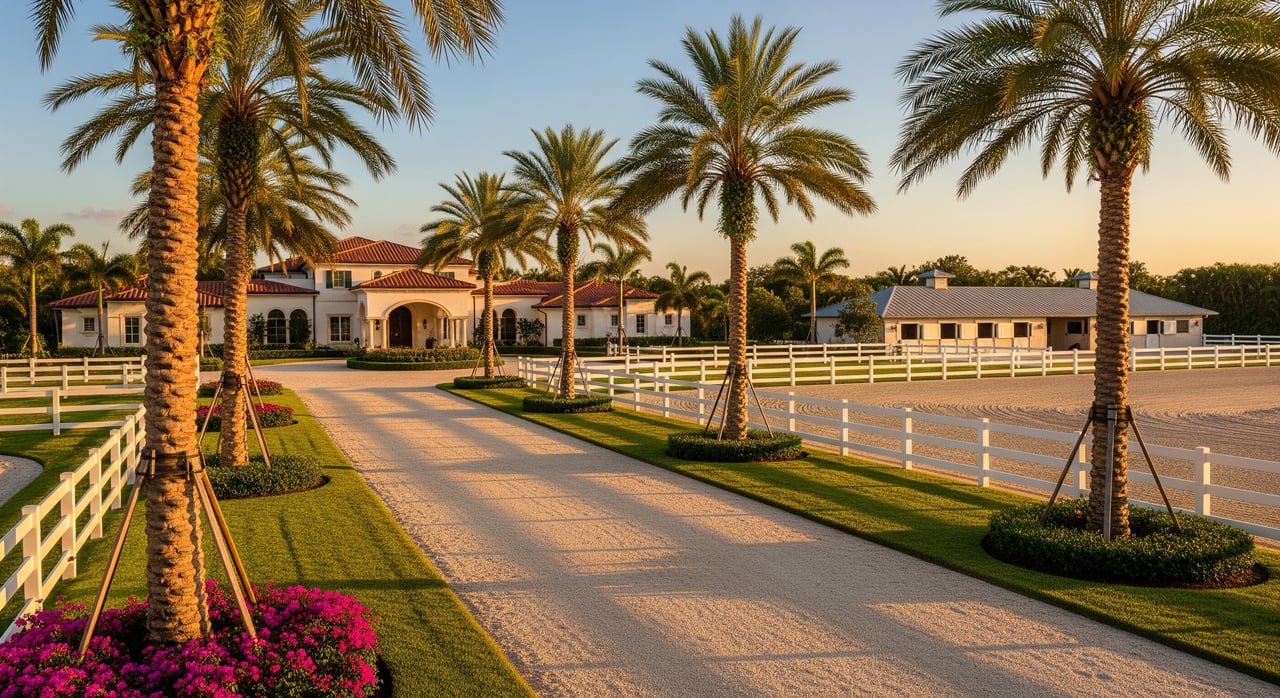
Comparing Wellington’s Top Equestrian Neighborhoods
February 5, 2026
February 5, 2026
Do you dream of riding out your back gate and hauling to the showgrounds in minutes? In Wellington, you can match that lifestyle to a neighborhood that fits your program, whether you compete at WEF, focus on dressage, or keep horses at home for the joy of daily rides. The choices can feel overwhelming when every property looks different and rules vary street by street. This guide breaks down how Wellington’s top equestrian communities compare, what to look for on each tour, and how to weigh tradeoffs like acreage, arenas, and commute time. Let’s dive in.
Wellington is a world-class hub for winter equestrian sport. The Winter Equestrian Festival operates at the Palm Beach International Equestrian Center grounds, drawing hunter and jumper riders from across the globe. The Global Dressage Festival runs nearby for high-level dressage. Polo has its own strong presence and adds to the seasonal energy and demand for close-in housing. This concentration of events supports a full ecosystem of trainers, farriers, feed and tack suppliers, and equine medical services.
Beyond show proximity, many buyers prioritize access to veterinarians, farriers, and specialized rehab. Several regional centers serve the area, and having that support network within a short radius can be as valuable as being near the showgrounds during peak season.
Wellington’s equestrian addresses fall into four main types. Each can work beautifully when it aligns with your discipline, budget, and daily routine.
These are properties within a short drive of the showgrounds. Lots are often under 1 to 3 acres and may be adapted suburban parcels or smaller purpose-built farms.
These planned areas were developed for horse use, with larger lots and equestrian-friendly rules. Parcels commonly range from 1 to 5 acres and allow barns by right or with specific guidelines.
Head farther west toward the edges of Wellington and neighboring unincorporated areas and you’ll find larger tracts, often 5 to 40+ acres.
Some residences do not include private barns but offer convenient access to commercial boarding or community arenas.
Lot size drives almost every other decision. It affects price, number of horses allowed, turnout, manure management, and your ability to host clinics. Study how the house, barn, arenas, and paddocks relate to one another and how horses move through the property. A thoughtful layout reduces labor and keeps horses safer.
Look at stall count and stall size, aisle width, ventilation, tack and feed storage, wash bays with hot and cold water, and laundry space. Built-in features like grooming bays, solariums, or recovery stalls can be valuable for higher-intensity programs. Check power supply and the condition of fans, misters, and any mechanical systems.
Your arena defines daily ride quality. Note the size, footing type, drainage, and whether the ring is covered or lighted. Many hunters, jumpers, and dressage riders do well with outdoor rings if the base is engineered for Wellington’s rainy season. Covered arenas are a premium feature and command higher prices.
Inspect fencing material and condition. Post-and-rail, vinyl, or pipe fencing are common. Count paddocks, note sizes, and look for good gates and sightlines. A small sacrifice paddock can protect turf during the wet months and reduce mud.
In Palm Beach County, engineered drainage is essential. Confirm the ring base, swales, culverts, and any pump systems. You can verify flood designations using the FEMA Flood Map Service Center. For major water management improvements or irrigation plans, review guidance from the South Florida Water Management District.
Rules vary by parcel and by whether you are inside the Town of Wellington or in unincorporated county areas. Before you buy, confirm allowed horse counts, barn and arena setbacks, whether boarding or lessons are permitted, and any signage limits. Start with the Palm Beach County Planning, Zoning & Building Division and the Town of Wellington municipal code and permitting for the specific address you are considering.
Central neighborhoods make daily hauling to PBIEC and GDF simpler. Factor in trailer parking at home, your typical tow route, and travel times during show season. Even a few extra minutes each way can add up when you ride or train multiple horses.
Consider distance to veterinarians, farriers, feed and tack suppliers, and rehab services. In practice, being 10 minutes closer to your vet or farrier can save hours over a busy week.
Every property is unique, but a few patterns hold:
Prices are driven by acreage, the quality and age of improvements, distance to show venues, and whether boarding is permitted. Because comps are thin and properties are highly specialized, it helps to view value through per-acre and facility-adjusted lenses rather than price per square foot. Confirm current pricing and availability through the local MLS at the time you shop.
Use this list when you compare properties:
Show season brings energy, events, and heavier traffic. Central neighborhoods can feel busy, while outer areas offer more space and quiet. If you plan to host clinics or board, look closely at rules and parking options for visiting trailers. For resale, facilities with strong drainage and quality arenas retain appeal, and parcels that allow permitted commercial activity can command a premium.
Start by ranking your non-negotiables: commute time, stall count, arena needs, and turnout. Then match them to the four neighborhood types above. A focused search helps you avoid compromises that hurt your program later. If you want a calm, experienced partner to guide you through zoning, property comparisons, and valuation, you can rely on a local advisor who understands Wellington’s equestrian market and manages every detail from search to closing.
Ready to tour with a plan or list your equestrian property with polished, global marketing? Connect with Renee Hasak PA for concierge-level guidance and proven equestrian expertise.
Stay up to date on the latest real estate trends.
Renee understands that buying or selling a home is one of the biggest decisions in the lives of her clients, and she loves partnering with people to make the process as smooth as possible.