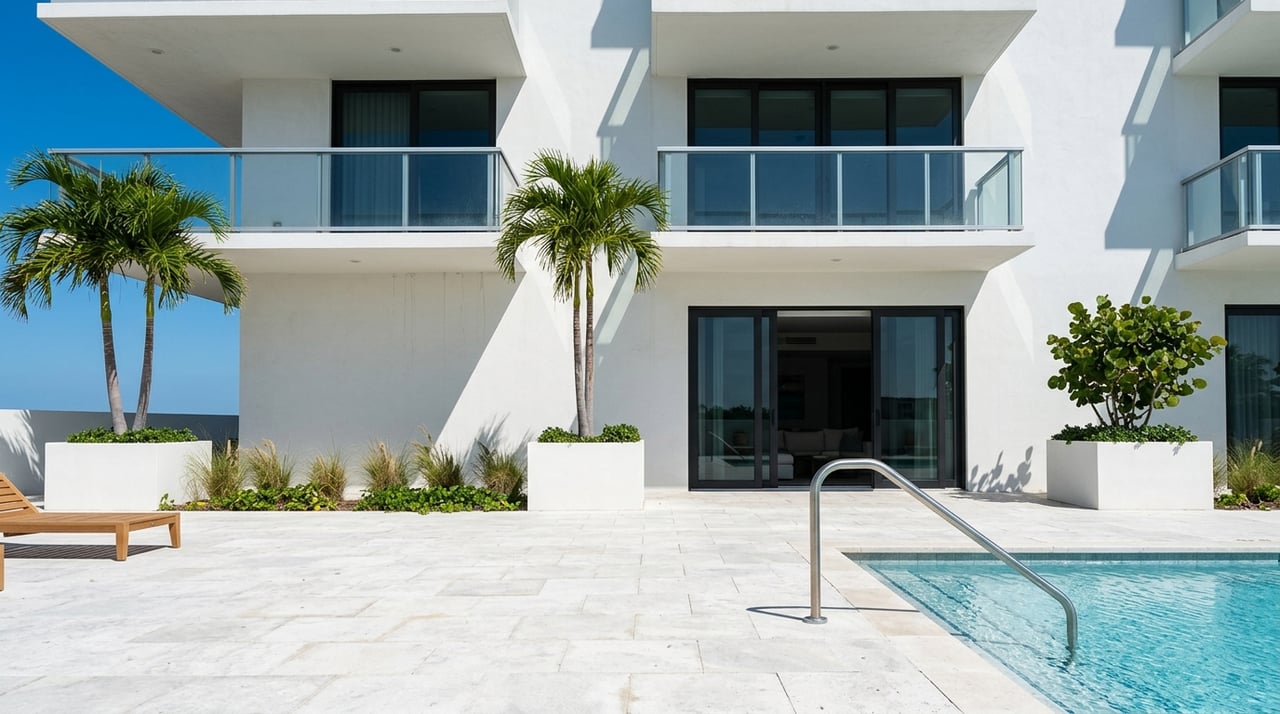
Buying An Oceanfront Condo In Juno Beach
May 7, 2026
May 7, 2026
You do not buy a Juno Beach oceanfront condo for the view alone. You buy into a building, an association, a reserve structure, and a set of storm and insurance realities that can shape your ownership costs for years to come. If you are considering an oceanfront purchase here, understanding those details early can help you protect both your lifestyle and your budget. Let’s dive in.
Juno Beach oceanfront condos span several decades of development, and that matters more than many buyers expect. The town notes that the condo era began in 1966, with building activity along Ocean Drive accelerating in the 1970s and continuing through the 1980s and 1990s.
Public building directories reflect that range clearly. Local inventory includes buildings such as The Tower at Juno Beach from 1973, The Manor from 1974, Horizon Condominiums from 1981, The Oceanfront from 1995, Waterfront on the Ocean from 1996, and Ocean Royale I and II from 2000.
For you as a buyer, building age is not a footnote. It can affect inspections, reserve funding, financing, insurance, and the likelihood of near-term capital projects.
In practical terms, older oceanfront buildings may face more pressure around component replacement and reserve funding. They may also be closer to milestone-inspection timing, especially in a saltwater environment.
Newer buildings can still have their own costs, but some major components may be further from replacement. That can make the ownership picture feel more predictable, especially if you are comparing monthly HOA costs and future assessment risk.
Florida’s current condo framework has made building due diligence much more important. If you are buying in a three-story-or-higher condominium building, the age and compliance status of the association should be part of your review from day one.
Florida’s milestone-inspection law applies to condominium or cooperative buildings that are three habitable stories or more. The first inspection is due by the end of the year the building reaches 30 years of age, and then every 10 years after that.
Local enforcement agencies may require the first inspection at 25 years if local conditions justify it, including proximity to salt water. In an oceanfront market like Juno Beach, that is especially relevant.
Florida also requires a Structural Integrity Reserve Study, or SIRS, for qualifying condo buildings that are three stories or more. For associations that existed on or before July 1, 2022, the first SIRS had to be completed by December 31, 2025, unless it could be completed at the same time as a milestone inspection due on or before December 31, 2026.
The SIRS must visually inspect key components, including the roof, load-bearing structure, fireproofing and fire protection systems, plumbing, electrical systems, waterproofing and exterior painting, and windows and exterior doors. It also covers other costly items where deferred maintenance or replacement could affect those systems.
For budgets adopted on or after December 31, 2024, associations subject to SIRS may not waive reserves for the required reserve items. That means reserve adequacy is now a central part of condo ownership, not an optional line item.
If you are serious about buying an oceanfront condo in Juno Beach, document review should happen before you rely on a low monthly fee or assume the building is financially simple. Florida law requires associations and sellers to provide a meaningful paper trail, and that information can reveal both strengths and risks.
Ask for these records before making your final decision:
Associations must distribute the SIRS and milestone-inspection summary to unit owners within 45 days of receipt, and those records are part of the official association records. If you see signs of deferred maintenance, low reserves, or repeated discussion of large projects, pause and look deeper.
Owning on the ocean in Juno Beach means planning for more than sunny days. The town states that flood risk can come from tropical storms, hurricanes, and heavy rainstorms, and notes that coastal areas, the shoreline, Pelican Lake, and inland bodies of water are prone to flooding.
The town also identifies US Highway 1 as the main evacuation route. That is a practical reminder that storm planning is part of oceanfront ownership.
Palm Beach County says FEMA’s updated flood maps became effective on December 20, 2024. The county also reports that more than 16,000 parcels experienced base-flood-elevation increases of one foot or more.
The bigger takeaway is simple: all county residents are in a flood zone and are encouraged to obtain flood insurance. For your condo search, it is smart to verify the exact flood zone and elevation data for the specific building, not just rely on a general impression of the area.
Flood coverage is not the same as a standard homeowners policy. The Florida Office of Insurance Regulation states that most homeowners and business policies do not cover flooding, and that flood insurance is available to condo unit owners through the National Flood Insurance Program or the private market.
Some mortgages require flood insurance. Even if financing does not require it, you should understand whether the building’s location and elevation make carrying that coverage a practical part of ownership.
Even when the association carries a master policy, your own condo unit policy remains important. Florida’s consumer insurance guidance explains that an HO-6 policy helps cover personal property and certain interior building items not insured by the association’s master policy.
The same guidance notes that HO-6 policies must include at least $2,000 of loss-assessment coverage. That can matter if a common-area loss or a reserve shortfall is passed through to unit owners.
Wind and hurricane issues should be reviewed separately from flood. The Florida Office of Insurance Regulation notes that consumers may be able to reduce premiums through wind-mitigation improvements.
It also explains that a separate hurricane deductible may apply, and that it is different from your standard deductible. Palm Beach County also states clearly that windstorm insurance does not cover flood damage.
Many buyers ask whether they can rent out a Juno Beach oceanfront condo when they are not using it. The answer depends on both town rules and the condo’s governing documents.
Juno Beach’s vacation-rental code limits occupancy to two persons per bedroom plus two additional persons. It also requires a written or online lease or rental agreement, a responsible party who can respond 24/7, and certain safety and posting standards, including evacuation-related information.
That means local vacation use may be possible in some settings, but it is not the same as unrestricted short-term rental use. On top of that, each building may have its own minimum lease terms, approval requirements, guest rules, and limits on how often you can rent.
Before you underwrite a condo as a second home or investment property, confirm these details in writing:
Florida law requires sellers to provide core condo documents, including the declaration, bylaws, rules, annual financial statement, annual budget, and when applicable the milestone-inspection summary and SIRS. In practice, that gives you the tools to verify rental flexibility building by building.
Because many oceanfront properties sit close to the Coastal Construction Control Line, exterior work may involve another layer of review. The Florida Department of Environmental Protection says construction and excavation seaward of the CCCL may require permitting.
That framework is designed to protect beaches, dunes, coastal vegetation, and public access. For you as a buyer, it means any exterior changes, storm repairs, balcony work, hardening projects, or beach-side alterations should be checked for proper permit history.
If a building has had seawall work, balcony restoration, or other shoreline-side improvements, ask whether those projects were properly permitted. That question can be especially important when evaluating future maintenance exposure.
Price differences among Juno Beach oceanfront condos are often about much more than square footage. In this market, the biggest variables usually include:
A beautifully updated unit in a building with strong reserves can offer a very different ownership experience than a similar-sized unit in an older building facing major capital projects. Looking at asking price alone rarely tells the full story.
If you want to buy with confidence, keep your process focused on the facts that shape long-term ownership.
Use this checklist as you narrow your options:
When you work through those items carefully, you are in a much better position to compare buildings on a true cost basis instead of just a list-price basis.
Buying oceanfront in Juno Beach can be incredibly rewarding, but the best purchases usually happen when the lifestyle appeal is matched by strong due diligence. If you want clear guidance as you compare buildings, review condo documents, and weigh long-term ownership costs in Palm Beach County, Renee Hasak PA offers the calm, hands-on support that helps you move forward with confidence.
Stay up to date on the latest real estate trends.

Renee understands that buying or selling a home is one of the biggest decisions in the lives of her clients, and she loves partnering with people to make the process as smooth as possible.