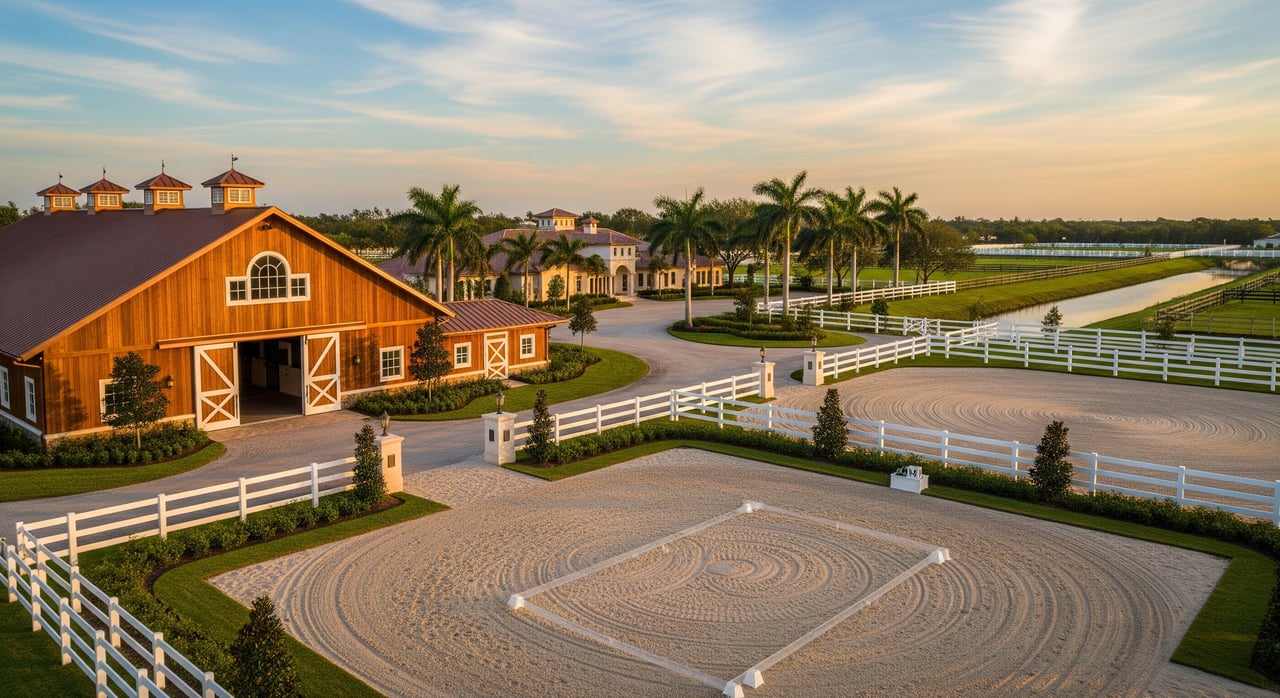
How to Price Equestrian Farms in Loxahatchee Confidently
January 1, 2026
January 1, 2026
Pricing a horse farm is not the same as pricing a home. You are balancing land utility, stall functionality, arena specs, and business potential, all in a market tied to Wellington’s world-class show season. If you want a price that attracts qualified buyers and holds up in negotiations, you need a clear framework and verified local data. This guide gives you practical steps and checklists tailored to Loxahatchee so you can set confident guardrails and move forward with clarity. Let’s dive in.
Loxahatchee sits in a long-established horse corridor that feeds demand from Wellington’s show circuit and major venues. Seasonal activity at the Palm Beach International Equestrian Center influences buyer interest and premiums for well-located farms near events and trainers. You can review schedules and demand drivers at the Palm Beach International Equestrian Center and the Global Dressage Festival.
Land use and zoning also shape value. Larger parcels, rural zoning, and the ability to add or improve equestrian facilities matter. Agricultural or greenbelt tax classifications can reduce carrying costs, so confirm current status with the Palm Beach County Property Appraiser.
Insurance, flood risk, and hurricane exposure affect both pricing and buyer underwriting. Check your flood zone and elevation using the FEMA Flood Map Service Center. For insurance availability and guidance, review the Florida Office of Insurance Regulation and public programs like Citizens Property Insurance Corporation.
Buyers pay for acres they can ride and graze. Map out usable acres for paddocks, barns, arenas, and septic. Note wetlands, conservation overlays, and buffers that reduce utility. Two similarly sized parcels can price very differently if one loses pasture to wetlands or setbacks.
Stall count is a common anchor, but quality drives real value. Document stall dimensions, construction type, mats, waterers, ventilation, wash racks, and aisle width. A smart layout with centralized tack, feed, and hay storage improves safety and operations, which supports price.
Arena specifications are critical. Note size, footing, base, subsurface drainage, and irrigation. Covered or indoor arenas typically command a premium in active show markets. In Florida’s rain patterns, good drainage and watering systems protect utility and value.
Fencing type and condition influence perception and maintenance costs. Track the number and size of paddocks, cross-fencing, and any shelters. Health of pasture, water supply, and weed control affect carrying capacity and long-term costs.
Safe ingress and egress, trailer turnaround, and ample parking make or break training and event operations. Poor flow reduces usefulness and often leads to price adjustments.
Water reliability, well capacity, arena irrigation, septic permits, and electrical service matter for day-to-day operations. Capacity should match intended stall count, lessons, or boarding activity.
Proximity to Wellington, PBIEC, and services like farriers and vets attracts premium buyers. Access to feed and tack suppliers lowers friction for trainers and traveling riders.
If the farm operates as a boarding or training business, gather verified income and expense statements. Buyers will separate the real estate value from business goodwill, client lists, and equipment.
Confirm zoning, horse-per-acre rules if any, building permits, and septic capacity. Unpermitted structures, restrictive easements, or HOA rules can reduce price.
Define what counts as a true comp for your farm. Set filters for minimum usable acreage, stall count, arena presence, and zoning. Confirm closing data, parcel details, and improvement specs through MLS, deed records, and the Palm Beach County Property Appraiser. Favor closed sales within 12 to 36 months and note any unusual sale conditions.
Code each comp for usable acres, stall count and functionality, arena type, fencing, drainage, trailer flow, and proximity to circuits. Use paired-sales logic to estimate increments, such as premiums for covered arenas or penalties for poor drainage. Apply a per-usable-acre and per-functional-stall adjustment instead of blunt averages.
Validate big-ticket improvements with the cost approach where appropriate. Estimate replacement cost for barns, arenas, and fencing, then subtract depreciation and add land value. For operating facilities, capitalize net operating income to test a price range. Methodology guidance is available from the Appraisal Institute and the American Society of Farm Managers & Rural Appraisers.
Use this quick list during inspections and valuation interviews:
Set realistic guardrails by bracketing price with comps, then confirming major premiums and discounts with cost and income checks. Watch for these common price movers:
A crisp pre-listing package helps buyers price with confidence and supports your ask.
You can shorten discovery and avoid surprises by verifying key items early.
A well-priced Loxahatchee farm reflects usable land, facility quality, location to circuits, and confirmed income or capacity. Pair credible comps with component adjustments, then cross-check with cost and income approaches to defend your range. If you want a calm, data-driven process tailored to equestrian properties, reach out for a confidential review of your farm and a local comps analysis.
Ready to price your property with confidence? Connect with Renee Hasak PA for a private valuation consult and a market-smart plan to bring your farm to the right buyers.
Stay up to date on the latest real estate trends.

Renee understands that buying or selling a home is one of the biggest decisions in the lives of her clients, and she loves partnering with people to make the process as smooth as possible.