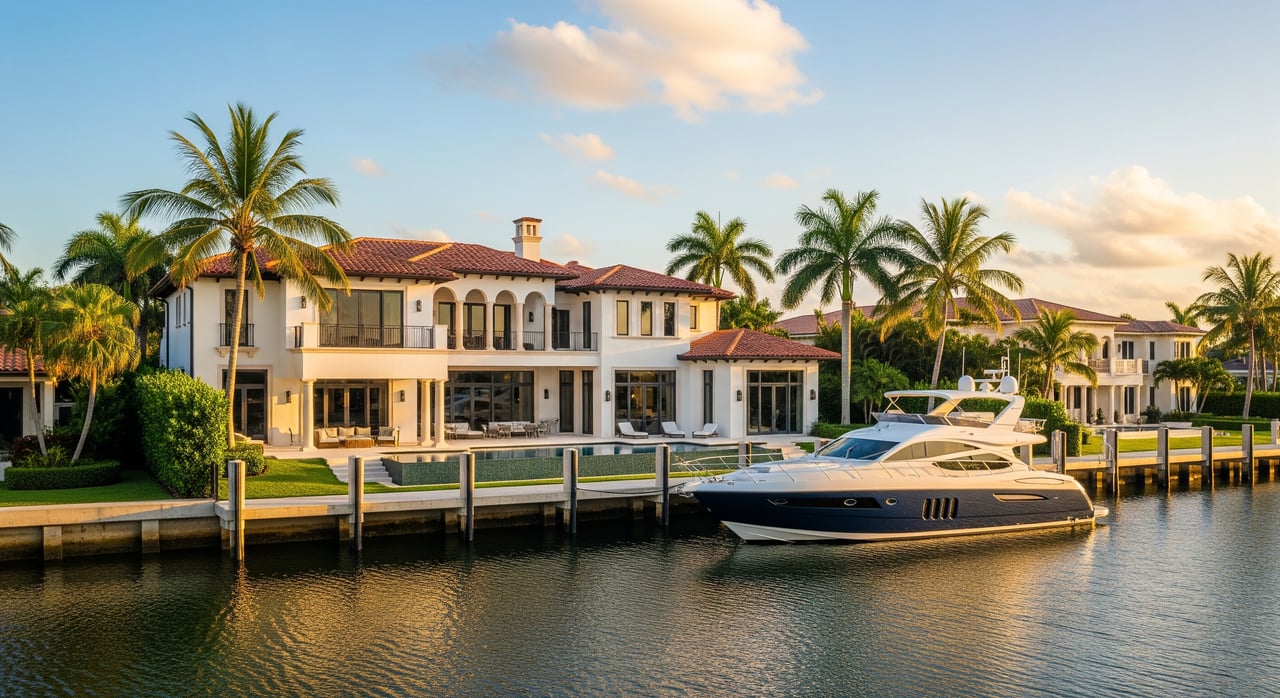
Your Boca Raton Waterfront Home Buying Roadmap
November 21, 2025
November 21, 2025
Dreaming of coffee on your dock and quick runs to the ocean, but not sure where to start in Boca Raton? Buying on the water is different from buying on a quiet street, and the details matter. From bridge heights to seawall condition and insurance, small oversights can turn into big surprises. This guide gives you a clear, step-by-step path so you can shop with confidence and protect your investment. Let’s dive in.
Not all “waterfront” is the same in Boca Raton. The type you choose affects boating access, permits, insurance, and resale.
Oceanfront homes offer direct Atlantic views and beach proximity. They also face higher exposure to storm surge and erosion. Construction and improvements near the shore are often regulated by the Coastal Construction Control Line and state rules that protect dunes and submerged lands. Private docks on the open beach are limited or highly regulated.
Homes on the Intracoastal Waterway enjoy protected cruising and often have private docks or community marinas. Navigation is typically calmer than the open ocean. Bridge openings and vertical clearances along the Intracoastal are key if your boat has a tall mast or flybridge.
Canal depths and maintenance vary by neighborhood. Some canals are dredged regularly and handle larger vessels. Others are shallow, need periodic dredging, or are better for shallow-draft boats and lifts. Confirm whether the canal is privately maintained and whether owners share dredging costs.
Bottom line: If fast access to the ocean is your priority, focus on Intracoastal and deep canals near the Boca Raton Inlet, then confirm bridges and depths match your boat.
Water access is only useful if it fits your vessel and plans.
Fixed bridges have a published clearance measured at mean high water. If your boat’s air draft is higher, you cannot pass under. Movable bridges open on a schedule or on request. Check schedules and rules through the U.S. Coast Guard Navigation Center.
Channel and canal depths vary. Private canals may silt and need dredging. Maintenance can fall to homeowners, an HOA, or a special district. Large assessments can occur if dredging is overdue.
How long does it take to reach open water? A 10-minute ride can be very different from 40 minutes with several bridges. Ask local marinas or review charts to estimate real transit times.
Action: Verify the exact bridge clearances at mean high water, check drawbridge schedules, and confirm depths along your daily route. Plan for tides as needed.
Your shoreline infrastructure drives value, safety, and annual costs.
Homes may have fixed docks, floating docks, pilings, and boat lifts or davits. Confirm ownership and transferability. In condos or communities with marinas, slips can be deeded, leased, assigned by waitlist, or non-transferable. Get documentation in writing.
Seawalls stabilize the shoreline. Age, materials, tie-backs, and cap condition all matter. A failing seawall can be a major capital expense. Many repairs and replacements require permits.
Work in submerged lands, docks, dredging, and seawalls often requires approvals from state and local agencies. Oceanfront parcels can have additional restrictions tied to coastal protection rules.
Action: Order a seawall and dock inspection from a marine contractor or seacoast engineer. Request permit history and remaining life estimates. Confirm power supply to the dock and lift capacity with a certified marine surveyor.
Community documents can make or break daily life and resale.
Condo associations can be more restrictive. Review reserve studies for seawall and dredging funds to gauge future assessments.
Waterfront ownership in coastal Florida includes specialized insurance and risk planning.
Action: Obtain quotes for flood and wind coverage early in the process. Use the NOAA tide and water level stations to understand local tide ranges that may affect clearance and docking.
Gather documents, line up inspections, and write strong contingencies before you sign.
Plan for recurring and periodic expenses that come with waterfront living.
If you are relocating or buying a second home, organization is your edge.
Function sells. Buyers increasingly value usable, permitted dockage and easy water access over views alone. Non-transferable or leased slips can narrow your buyer pool. High insurance costs or a seawall at the end of its life can reduce offers and complicate financing. Consider how canal dredging and HOA health affect future marketability.
Use official sources to confirm risk, permits, bridge info, and property data.
When you match your boat and lifestyle to the right access, confirm the dock and seawall, and secure insurance up front, you set yourself up for a smooth closing and years of easy enjoyment. If you want a curated shortlist and a plan tailored to your needs, let a local luxury advisor guide you from first tour to final inspection.
Have questions or want a private consultation on Boca Raton waterfront options? Connect with Renee Hasak for concierge-level guidance and calm, expert representation across Palm Beach County. Contact [Unknown Company] to get started today.
Stay up to date on the latest real estate trends.

Renee understands that buying or selling a home is one of the biggest decisions in the lives of her clients, and she loves partnering with people to make the process as smooth as possible.