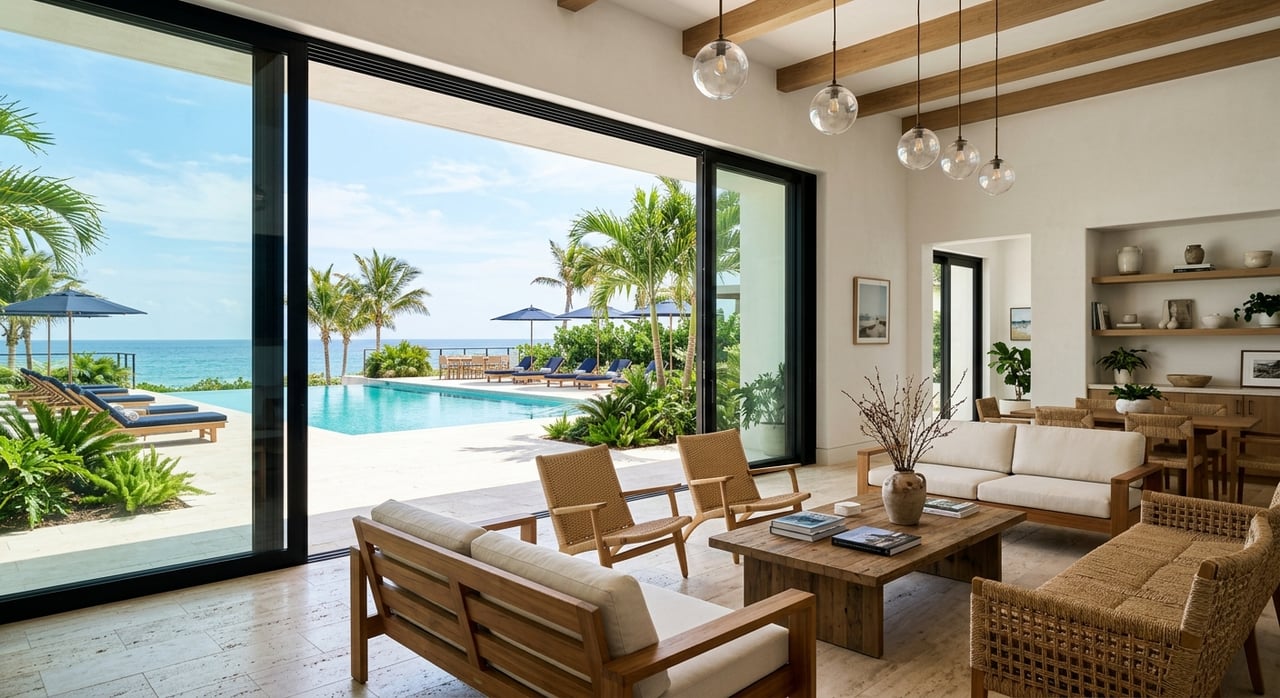
Comparing Palm Beach Gardens Condo and Townhome Amenities
May 21, 2026
May 21, 2026
Choosing a condo or townhome in Palm Beach Gardens is not just about square footage or finishes. In this market, amenities can shape your daily routine, your monthly costs, and even your long-term peace of mind. If you want to understand what amenities really matter here, what they may cost you, and what to review before you buy, this guide will help you compare communities more confidently. Let’s dive in.
Palm Beach Gardens has a lifestyle that naturally supports amenity-rich communities. The city maintains 15 parks across about 185 acres, plus two recreation centers, an aquatic complex, a tennis and pickleball center, a youth enrichment center, a greenmarket, and hundreds of programs and events.
That local backdrop helps explain why many condo and townhome buyers here look beyond the unit itself. You may want a home that gives you easy access to recreation, social spaces, and low-maintenance living near shopping, dining, and entertainment hubs like Downtown Palm Beach Gardens, Legacy Place, Midtown, PGA Commons, The Gardens Mall, and Alton Town Center.
Golf also plays a visible role in the city’s identity. Palm Beach Gardens highlights Sandhill Crane Golf Club and serves as the host city for the Cognizant Classic, so golf-related living and proximity to golf amenities often factor into buyer decisions.
Amenities in Palm Beach Gardens can range from simple shared spaces to full resort-style packages. What you find often depends on the age of the community, its price point, and whether it is part of a larger master-planned development.
At the more basic end, some communities focus on a few key shared features. Meridian Park, for example, lists a pool, clubhouse, and shuffleboard courts, while Longwood lists a clubhouse with kitchen and entertainment space, exercise equipment, library, pool table, and card table.
Other communities offer a broader amenity mix. Fiore lists a resort-style pool, gym, putting green, garages, volleyball court, media center, cyber cafe, conference room, BBQ area, lake path, and gated playground.
Some communities combine condo or townhome living with a more expansive neighborhood setting. Evergrene includes a fitness center, a large pool, basketball, volleyball, pickleball, a poolside tiki restaurant and bar, and parks. Westwood Gardens lists three pools, a clubhouse, tennis courts, basketball courts, and handball courts.
When you compare communities, most amenities tend to fall into a few broad groups:
In some markets, tennis and pickleball are nice extras. In Palm Beach Gardens, they are much more central to the local lifestyle.
The city’s Tennis & Pickleball Center includes 20 Har-Tru clay tennis courts, 10 pickleball courts, year-round programming, leagues, tournaments, and event and café space. That means racquet-sport amenities inside a community may be especially appealing to buyers who want easy daily access, but they are also easy to compare against strong public options in the city.
Golf is another amenity lens that matters here. If a condo or townhome community is near golf facilities or tied to a golf-oriented setting, that may carry more value for you than it would in a market where golf is less embedded in the local identity.
Security and access control are common features in higher-end and master-planned communities in Palm Beach Gardens. Evergrene identifies itself as gated, Fiore notes video surveillance, and the PGA National community operates across 2,340 acres with nearly 40 neighborhood associations plus separate POA operations, parks, security, and gate access.
For you as a buyer, that means amenities may come with a more layered fee structure. In some communities, you may have a condo or HOA fee plus costs tied to a master association or other shared recreational structure.
This is one of the most important details to clarify early. A community can look attractive on the surface, but the real cost picture may involve more than one association or more than one recurring charge.
A long amenity list does not automatically mean a better value. The key is understanding what is included, what is optional, and how the association funds maintenance and future repairs.
Florida law defines an HOA assessment or amenity fee as money payable to the association, a developer, or another owner of common areas or recreational facilities. Unpaid amounts can become lienable, and HOA budgets must separately identify fees or charges paid for recreational amenities.
That matters because the monthly number you first see may not tell the full story. Association financial reports can include costs for security, recreation facilities, insurance, lawn care, building maintenance and repair, administration, salary expenses, and reserves.
When you compare condo and townhome communities, ask these questions:
A community with strong amenities and a visible maintenance culture may offer more stability than one with lower dues but limited reserves.
In Florida, condo and townhome communities do not all follow the same legal framework. Some are governed as condominiums under Chapter 718, while others are HOA-governed under Chapter 720.
That distinction matters because the recordkeeping rules, reserve obligations, and inspection requirements can differ. This is especially important with townhomes, since some operate as condominiums and others as HOA communities.
For condominiums, Florida law requires official records to include core documents such as the declaration, bylaws, rules, insurance policies, accounting records, structural integrity reserve studies, structural or life-safety inspection reports, building permits, and other key records. Large associations must also post many of these records online, and purchasers can request them.
For older or larger condo buildings, structural inspections and reserve studies are especially important. Florida law requires milestone inspections for condominium or cooperative buildings that are three habitable stories or more, generally by the end of the year the building turns 30 years old, with a 25-year trigger possible in areas near salt water, and then every 10 years thereafter.
The Florida DBPR has also said older unit-owner-controlled associations were required to complete a Structural Integrity Reserve Study by December 31, 2025, and qualifying residential condominiums must complete a SIRS at least every 10 years after that. Required reserve funding for covered items must be maintained under current condo rules.
For buyers, the practical takeaway is simple: a polished pool deck or updated clubhouse should never distract from the association’s financial and structural health.
Before making an offer, ask for the current budget, latest financial report, governing documents, and any recent reserve study or structural report. For condominiums, Florida law says these records are part of the official records, and structural inspection reports and reserve studies must be provided to potential purchasers.
This step helps you evaluate not just what the community offers today, but how well it is positioned to maintain those amenities over time.
Use this checklist when comparing Palm Beach Gardens condo and townhome communities:
The best community for you depends on how you plan to live. If you want a lock-and-leave seasonal property, you may care most about gated access, exterior maintenance, and a well-run association. If you expect to use amenities often, features like pools, fitness space, racquet sports, and social areas may carry more day-to-day value.
It also helps to compare what the community offers against what Palm Beach Gardens already provides nearby. With strong city recreation options, shopping destinations, dining centers, and golf access, you may decide you need fewer on-site amenities, or you may decide the convenience of having them within your neighborhood is worth the added cost.
The goal is not to find the community with the longest amenity list. It is to find the one where the lifestyle, governance, and financial structure make sense for your needs.
If you are weighing condo or townhome options in Palm Beach Gardens, working with a local advisor can help you look past the sales sheet and focus on the details that affect value, use, and future costs. For tailored guidance as you compare communities across Palm Beach County, connect with Renee Hasak PA.
Stay up to date on the latest real estate trends.
Renee understands that buying or selling a home is one of the biggest decisions in the lives of her clients, and she loves partnering with people to make the process as smooth as possible.